
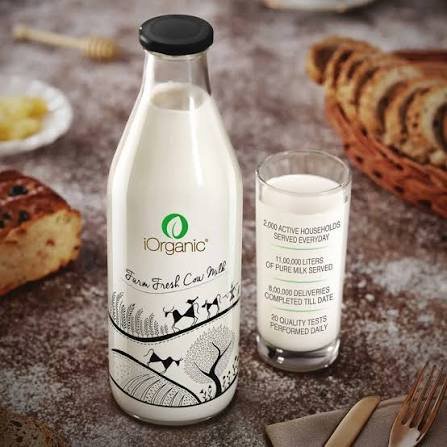
Walk into a premium grocery store in India and the milk shelf can feel unexpectedly confusing. One bottle says “certified organic”, another says “A2”, a third says “desi cow milk”, while a fourth combines nearly every health-friendly phrase on the label.
So, in the organic milk vs A2 milk comparison, which one should you actually buy?
The most important thing to understand is that organic and A2 describe two entirely different characteristics of milk.
Organic milk describes how the animals are raised, fed and managed. A2 milk describes the type of beta-casein protein present in the milk.
A bottle of milk can therefore be:
- organic but not exclusively A2;
- A2 but not organic;
- both organic and A2; or
- neither organic nor exclusively A2.
The better choice depends on what matters to you: certified farming practices, digestive comfort, food safety, nutrition, animal management, affordability or a combination of these factors.
Organic Milk vs A2 Milk: Four-Box Comparison Matrix
| Product type | Farming system | Beta-casein type | What it means |
|---|---|---|---|
| Conventional A1/A2 milk | Conventional dairy farming | Usually contains A1 and A2 | Regular packaged milk and generally the most affordable |
| Conventional A2 milk | Not necessarily organic | A2 beta-casein only, when verified | Purchased mainly for its protein type |
| Organic A1/A2 milk | Certified organic production | May contain A1 and A2 | Focuses on organic farming and livestock standards |
| Organic A2 milk | Certified organic production | A2 beta-casein only | Combines organic production with the A2 protein claim |
Quick Answer: Organic and A2 Describe Different Things
The simplest way to understand organic milk vs A2 milk is:
Organic tells you about the production system. A2 tells you about one type of milk protein.
In India, a genuinely organic packaged food should be linked to a recognised certification system and carry the relevant organic labelling information. The Jaivik Bharat identity mark was introduced to help consumers distinguish certified organic food from non-organic products. (jaivikbharat.fssai.gov.in)
A2, on the other hand, refers to milk containing the A2 form of beta-casein rather than the A1 form. It does not automatically tell you whether the animals received organic feed, whether the farm is certified, whether the milk is pasteurised or whether the product is lactose-free.
What Does Organic Milk Mean in India?
Organic milk comes from animals managed according to recognised organic livestock-production standards.
It is not automatically the same as milk described as:
- natural;
- farm fresh;
- chemical-free;
- local;
- grass-fed;
- indigenous; or
- desi cow milk.
These descriptions may provide useful information, but they do not replace organic certification.
Under India’s organic production framework, livestock standards cover areas such as animal feed, husbandry, veterinary management and the use of inputs including antibiotics, hormones, growth boosters and feed additives. Organic feed must primarily come from permitted organic sources, subject to the conditions and limited exceptions provided within the applicable standards. (NPOP)
Organic Milk Is About the Production Process
In the organic milk vs A2 milk comparison, organic milk can tell you more about:
- how animal feed is sourced;
- which farming inputs are permitted;
- how livestock health is managed;
- how the farm maintains production records;
- how organic and non-organic milk are segregated; and
- whether an authorised certification system has verified the operation.
Organic certification, however, does not automatically tell you which beta-casein protein is present. An organic herd may produce A1 milk, A2 milk or a mixture of the two.
What Are A1 and A2 Milk Proteins?
Milk contains two broad groups of protein: whey and casein. Beta-casein is one of the proteins within the casein group.
A1 and A2 are genetic variants of beta-casein. They differ slightly in their amino-acid structure. The type of beta-casein produced by a cow is primarily determined by its genetics.
Milk collected from a mixed herd may contain both A1 and A2 beta-casein. Milk marketed as A2 is generally expected to come from animals identified as producing only the A2 beta-casein variant.
This means A2 is a protein-composition claim rather than a complete quality certification.
What the A2 Label Does Not Automatically Mean
A2 milk is not necessarily:
- organic;
- lactose-free;
- raw;
- grass-fed;
- safer than pasteurised milk;
- suitable for people with milk allergy; or
- higher in calcium or protein.
This distinction is central to understanding the A2 milk and organic milk difference.
Is A2 Milk Organic?
No. A2 milk is not automatically organic.
A farm may raise A2-producing cows using conventional dairy practices. The resulting milk can be A2 without being certified organic.
Similarly, an organic farm may have animals that produce both A1 and A2 beta-casein. Its milk can be certified organic without being exclusively A2.
To answer the common question, “Is A2 milk organic?”, look for two separate types of evidence:
- Evidence supporting the A2 claim, such as animal genotyping, milk testing and supply-chain segregation.
- Recognised organic certification and labelling.
Do not assume that words such as pure, natural, desi, cruelty-free or farm-to-home prove that a product is certified organic.
FSSAI withdrew an August 2024 advisory concerning A1 and A2 claims for further consultation and stakeholder engagement. Consumers should therefore look for transparent testing and traceability information instead of treating the word “A2” as equivalent to a government organic certification mark. (FSSAI)
Can Milk Be Both Organic and A2?
Yes. Milk can be both organic and A2 when:
- it comes from animals producing only A2 beta-casein; and
- the farm and supply chain comply with a recognised organic certification programme.
Organic A2 milk often costs more because producers may have to maintain a verified A2 herd, purchase certified organic feed, conduct tests, maintain records, segregate milk and operate a temperature-controlled delivery system.
However, a higher price does not prove either claim. In the organic milk vs A2 milk market, documentation matters more than premium packaging.
The Four Types of Milk You May Find
1. Conventional A1/A2 Milk
This is the standard milk supplied by many established dairies. It may come from a pooled supply and usually contains a combination of A1 and A2 beta-casein.
Its main advantages are affordability, availability, standardised fat categories, pasteurisation and established distribution systems.
For families that digest milk comfortably, ordinary pasteurised milk remains a practical and nutritious choice.
2. Conventional A2 Milk
Conventional A2 milk comes from animals selected for the A2 beta-casein type, but the farm may not be certified organic.
It may appeal to people who want to test whether A2-only milk feels easier to digest. However, buyers should not assume that conventional A2 milk is organic, lactose-free, antibiotic-free or pesticide-free unless these claims are separately supported.
3. Organic A1/A2 Milk
Certified organic milk may contain both A1 and A2 proteins.
Its main value lies in the verified production system rather than its beta-casein profile. It may suit households primarily interested in organic feed, traceability and certified livestock-management practices.
4. Organic A2 Milk
Organic A2 milk combines organic production standards with the A2 beta-casein claim.
It is often the most expensive option in the organic milk vs A2 milk category. Before paying the premium, check that both claims are independently supported.
Organic Milk vs A2 Milk Difference: Comparison Table
| Factor | Organic milk | A2 milk |
|---|---|---|
| What the term describes | Farming, feed and livestock-management system | Type of beta-casein protein |
| Main verification | Recognised organic certification | Genotyping, testing and traceability |
| Can it contain A1 protein? | Yes | It should not when sold as A2-only milk |
| Does it contain lactose? | Normally yes | Normally yes |
| Is it suitable for milk allergy? | No | No |
| May it improve digestion? | Not specifically because it is organic | Possibly for some people |
| Main nutritional difference | Fatty-acid profile may vary | Main nutrients are generally similar |
| Is it always pasteurised? | No | No |
| Primary buying reason | Production practices and certification | Protein type and possible tolerance |
| Can it be both organic and A2? | Yes | Yes |
Is A2 Milk Easier to Digest?
This is one of the most discussed parts of the organic milk vs A2 milk debate.
Several small randomised and crossover studies have reported fewer gastrointestinal symptoms after participants consumed A2-only milk compared with milk containing both A1 and A2 beta-casein. Reported differences have included abdominal discomfort, bloating and changes in bowel-related symptoms among selected participants. (PubMed)
That does not prove that A2 milk is easier for everyone to digest.
Reviews of the evidence have pointed out that many human studies are small, some have industry involvement, and much of the broader evidence comes from laboratory or animal research. Large, independent and long-term human studies are still limited. (PubMed Central (PMC))
A fair conclusion is that some people who experience discomfort after regular milk may tolerate A2 milk better, but the benefit is not guaranteed.
A2 Milk Is Not Lactose-Free
Lactose intolerance occurs when the body has difficulty digesting lactose, the natural sugar found in milk.
A2 milk normally contains roughly the same type of lactose as ordinary milk. Changing the beta-casein protein does not remove the lactose.
Some people who believe they are lactose intolerant may report fewer symptoms after switching to A2 milk. However, that does not mean A2 milk is a treatment for confirmed lactose intolerance.
Someone with diagnosed lactose intolerance may need:
- lactose-free dairy milk;
- smaller servings;
- fermented dairy products;
- lactase supplements; or
- a suitable non-dairy alternative.
Persistent symptoms should be discussed with a qualified healthcare professional.
A2 Milk Is Not Suitable for Milk Allergy
A cow’s-milk allergy is an immune reaction to milk proteins.
A2 milk still contains beta-casein and other milk proteins. It can therefore trigger an allergic reaction and should not be promoted as an allergy-safe alternative.
Claims that A2 milk prevents diabetes, autism, heart disease, cancer or other chronic illnesses also go beyond the available clinical evidence.
Does Organic Milk or A2 Milk Have More Nutrients?
For basic nutrition, the organic milk vs A2 milk difference is usually smaller than advertisements suggest.
Both types can provide:
- protein;
- calcium;
- fat;
- lactose;
- vitamin B12;
- phosphorus; and
- other micronutrients.
The precise composition of milk varies according to the animal species, breed, feed, season, fat category, fortification and processing method.
Nutritional Profile of Organic Milk
Research comparing organic and conventional dairy systems has found that organic milk may contain a different fatty-acid profile, including higher average levels of omega-3 fatty acids in some studies.
However, some reviews have also found lower iodine and selenium concentrations in organic milk. These findings do not prove that every organic brand is nutritionally superior or that consuming organic milk produces better long-term health outcomes. (PubMed Central (PMC))
Nutritional Profile of A2 Milk
A2 milk is generally similar to regular milk in its main nutrients.
Its defining characteristic is the beta-casein variant—not a guaranteed increase in calcium, protein, vitamins or energy.
When assessing organic milk vs A2 milk, compare the nutrition panel rather than relying only on the claims printed on the front.
Check the Fat Category
Two products may differ more because one is full-cream and the other is toned than because one is organic or A2.
Compare the following values per 100 ml:
- protein;
- total fat;
- saturated fat;
- carbohydrates;
- calories;
- calcium, where declared; and
- vitamin A and vitamin D fortification.
Pasteurised vs Raw Organic and A2 Milk
Neither organic nor A2 means raw.
Similarly, raw milk is not automatically organic, A2 or nutritionally superior.
Pasteurisation uses controlled heat to reduce harmful microorganisms. Public-health authorities recommend pasteurised milk because raw milk can contain disease-causing organisms even when it comes from a clean farm or an apparently healthy animal. Pasteurised milk provides the essential nutritional benefits of milk with a much lower microbial risk. (CDC)
For Indian households purchasing loose or unpasteurised milk, FSSAI consumer guidance advises boiling it before use. (FSSAI)
Food safety is especially important for:
- young children;
- pregnant women;
- older adults; and
- people with weakened immunity.
Do not treat the terms raw, unprocessed or farm fresh as automatic signs of higher quality.
Organic Milk vs A2 Milk Buying Checklist
Before choosing a product, use this quick checklist.
Checking Organic Milk
- Look for the Jaivik Bharat logo.
- Check the name or details of the certification body.
- Confirm the FSSAI licence number.
- Check whether the word “organic” is supported by certification.
- Do not treat “natural” or “farm fresh” as equivalent to organic.
- Check the batch number, packing date and use-by date.
Checking A2 Milk
- Look for a clear A2 beta-casein claim.
- Ask whether the animals are genetically tested as A2A2.
- Ask whether the milk is periodically tested.
- Check whether milk from different herds is kept separate.
- Do not assume all desi cow milk is automatically verified A2 milk.
- Remember that A2 milk normally contains lactose.
Checking Milk Safety and Quality
- Confirm whether the milk is pasteurised, UHT-treated or raw.
- Check whether refrigeration is required.
- Examine the packet for leaks, swelling or damage.
- Check the fat category and nutrition panel.
- Make sure home-delivered milk arrives cold.
- Avoid products with vague claims but no traceability information.
Is the Higher Price Worth Paying?
The premium charged in the organic milk vs A2 milk category is worthwhile only when the feature you are paying for matches your priorities and can be verified.
When Organic Milk May Be Worth It
Organic milk may justify the additional cost when you value:
- certified organic feed;
- regulated farm inputs;
- traceability;
- documented livestock-management practices; and
- support for organic dairy systems.
When A2 Milk May Be Worth It
A2 milk may be worth trying when:
- ordinary milk repeatedly causes mild digestive discomfort;
- you do not have a diagnosed milk allergy;
- you understand that A2 milk still contains lactose; and
- the producer provides credible information supporting the A2 claim.
When Organic A2 Milk May Be Worth It
Organic A2 milk may suit you when both the production system and protein type matter to your household.
However, verify both claims separately. Organic certification does not prove A2 status, and an A2 claim does not prove organic production.
When Regular Milk Is Enough
Ordinary pasteurised milk remains a valid choice when:
- you tolerate it comfortably;
- budget is important;
- you want reliable daily availability; and
- the product comes from a licensed, reputable dairy.
Premium milk should not be treated as compulsory for good nutrition.
Which Milk Should You Choose?
Choose certified organic milk when your main concern is how the animals are raised, fed and managed.
Choose verified A2 milk when your main concern is beta-casein type and you want to test whether it affects your digestive comfort.
Choose organic A2 milk when you value both features and can verify both claims.
Choose regular pasteurised milk when affordability, availability and standard nutrition are your priorities and you tolerate it well.
The central lesson from the organic milk vs A2 milk comparison is simple: one label describes production, while the other describes protein.
Neither label alone tells you everything about nutrition, digestion, safety or overall quality.
Frequently Asked Questions About Organic Milk vs A2 Milk
1. What is the main A2 milk and organic milk difference?
Organic refers to farming, animal feed and livestock-management standards. A2 refers to the beta-casein protein present in milk. A product can be organic, A2, both or neither.
2. Is A2 milk organic by default?
No. A2 milk is organic only when it has also been produced and certified according to a recognised organic standard.
3. Is organic milk always A2?
No. Certified organic milk may contain A1 and A2 beta-casein unless the producer separately verifies that it is A2-only milk.
4. Is all desi cow milk A2?
Do not assume that the words “desi cow” prove A2 status. The claim should be supported through animal genotyping, milk testing and proper separation of milk.
5. Does A2 milk contain lactose?
Yes. A2 refers to a milk protein, while lactose is milk sugar. A2 milk is lactose-free only when it is separately processed and labelled as lactose-free.
6. Can lactose-intolerant people drink A2 milk?
Some people may experience fewer symptoms, but A2 milk still contains lactose and is not a guaranteed solution for lactose intolerance.
7. Is A2 milk safe for someone with a milk allergy?
No. A2 milk contains milk proteins and may cause an allergic reaction in someone with a cow’s-milk protein allergy.
8. Is organic A2 milk healthier?
Organic A2 milk combines certified production standards with the A2 protein type. However, current evidence does not establish that it is universally healthier for every person.
9. Does boiling change A1 milk into A2 milk?
No. Boiling does not change the beta-casein type or convert A1 milk into A2 milk.
10. Which is better for children: organic milk or A2 milk?
There is no universal answer. The child’s age, diet, fat requirements, lactose tolerance, allergy history and medical needs matter more than a premium label. Use safely pasteurised milk and seek paediatric advice for feeding concerns.
Final Verdict on Organic Milk vs A2 Milk
There is no automatic winner in the organic milk vs A2 milk debate.
Organic milk is the more relevant choice when certified farming practices, feed standards and traceability are your main priorities.
A2 milk is a protein-specific option that may feel easier to digest for some people. However, the evidence is still developing, and A2 milk is neither automatically organic nor lactose-free.
Organic A2 milk combines both features, but consumers should confirm that each claim is properly verified.
Read beyond the front label. Check organic certification, A2 testing, pasteurisation, nutrition, freshness, cold-chain handling and price.
The best milk is not necessarily the bottle carrying the largest number of premium claims. It is the product that safely fits your household’s nutrition, tolerance, values and budget.
See Also
- FSSAI clarifies A1 and A2 milk labelling requirements for dairy products
- A1 Milk vs A2 Milk – Which is Better? Expert Opinion by Nutritionist
- NPOP vs PGS India: Which Certification to Trust?
- How to Check Organic Certification Online in India: A Simple Shopper’s Guide
- Jaivik Bharat Logo Meaning: How Indian Shoppers Can Identify Real Organic Food
- The Ultimate Guide to A2 Cow Ghee Benefits: Reclaim Your Family’s Health Heritage
- Is Organic Food More Nutritious? What Science Honestly Says