
When you pick up a packet of organic atta, rice, dal, spices or honey in India, you may notice the India Organic logo, the PGS-India Organic logo, the Jaivik Bharat mark—or a confusing combination of all three.
Understanding NPOP vs PGS India can help you distinguish a properly certified organic product from one that merely uses attractive words such as “natural”, “farm fresh”, “pure” or “chemical-free”.
Quick Answer: The Main Difference Between NPOP and PGS-India
NPOP uses accredited third-party certification bodies to inspect and certify organic operators, and it supports both domestic sales and exports. PGS-India is a government-recognised participatory system, designed mainly for local and domestic markets, in which farmers inspect one another and make collective certification decisions under Regional Council supervision.
Both are legitimate organic certification systems. The real question is not simply which logo looks more trustworthy, but whether the certificate is current, traceable and valid for the food inside the packet. NPOP is implemented by APEDA, while PGS-India operates under the Ministry of Agriculture and Farmers Welfare.
NPOP vs PGS India Organic Certification at a Glance
| Comparison point | NPOP certification | PGS-India certification |
|---|---|---|
| Full name | National Programme for Organic Production | Participatory Guarantee System for India |
| Assurance model | Independent third-party certification | Participatory peer appraisal |
| Main administrator | APEDA, Ministry of Commerce and Industry | Department of Agriculture and Farmers Welfare |
| Certification support | APEDA-accredited certification bodies | Local Groups and authorised Regional Councils |
| Intended market | Domestic and export markets | Mainly local and domestic markets |
| Main logo | India Organic | PGS-India Organic |
| Conversion-stage identification | Conversion status shown through NPOP certification records and labels | PGS-India Green |
| Traceability system | TraceNet, scope certificates and transaction certificates | PGS portal UID, certificates and Regional Council records |
| Export eligibility | Used for certified organic exports from India | Not a replacement for NPOP export certification |
| Usually suitable for | Exporters, processors, national brands and complex supply chains | Farmer groups, cooperatives and shorter domestic supply chains |
The NPOP vs PGS India comparison is therefore not a contest between genuine and fake organic certification. Both systems work towards organic integrity, but they use different methods of inspection, decision-making and traceability. (APEDA)
What Is NPOP Organic Certification?
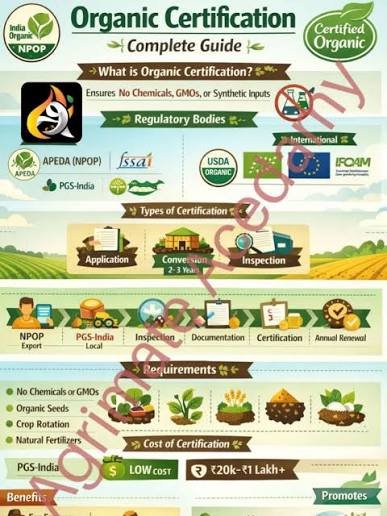
NPOP stands for the National Programme for Organic Production. It establishes standards for organic farming, processing, handling, accreditation, inspection, certification and use of the India Organic certification mark.
NPOP was introduced by the Government of India to create a formal third-party certification system, particularly for organic exports. APEDA acts as the secretariat for its implementation. Organic products exported from India must comply with NPOP regulatory requirements, although the importing country may impose additional conditions.
Under NPOP, a farmer, producer group, processor, handler or exporter applies to an APEDA-accredited certification body. The operator must generally:
- Submit details of the farm or operation.
- Maintain production and purchase records.
- Follow the applicable organic standards.
- Allow inspections and sampling.
- Correct any identified non-compliance.
- Maintain separation between organic and conventional products.
- Demonstrate traceability from production to sale.
The certification body reviews the operation and makes an independent certification decision. A scope certificate is issued annually and specifies which production, processing or handling activities are certified.
For farmer groups, NPOP may use an Internal Control System. Farmers undergo documented internal checks, while the accredited certification body audits the group and the effectiveness of its control system.
Current NPOP rules also provide for annual inspections, additional risk-based inspections, unannounced visits and residue testing. This gives NPOP a relatively formal and independent compliance structure.
What Is PGS-India Organic Certification?
PGS-India is a participatory organic quality-assurance system. Instead of relying mainly on an external commercial certifier, it builds assurance through farmer participation, shared responsibility, transparency, documentation and peer appraisal.
A PGS Local Group normally consists of farmers from the same village or nearby villages. The members sign an organic pledge, maintain farm records, attend meetings and inspect one another’s farms.
During peer appraisal:
- Farmers visit another member’s farm.
- They examine inputs, crops and farming practices.
- They review farm histories and records.
- Findings are recorded in appraisal forms.
- Non-compliances are discussed.
- The group collectively decides who qualifies for certification.
PGS guidelines require farms to be appraised by peer-review teams. The group then uploads its peer-appraisal summary and certification decision to the PGS-India portal. After approval, the Regional Council issues or endorses the certificate.
PGS-India is not based on informal trust alone. It requires farm records, group meetings, appraisal reports, certification decisions, estimated yields, portal entries and traceability information.
The system was designed mainly to make certification more accessible to farmer groups serving India’s domestic market. While several institutional services are facilitated without commercial third-party certification charges, some Regional Council inspections and certification services may still involve fees.
Who Administers the Two Organic Certification Systems?
The two major types of organic certification in India operate through different government ministries.
NPOP and APEDA Organic Certification
NPOP is managed by the Agricultural and Processed Food Products Export Development Authority, or APEDA, under the Ministry of Commerce and Industry.
APEDA:
- Maintains the NPOP regulatory framework.
- Accredits certification bodies.
- Publishes the current list of approved certifiers.
- Oversees certification and surveillance systems.
- Operates TraceNet for organic supply-chain information.
- Administers the India Organic certification mark.
APEDA regularly updates its list of accredited NPOP certification bodies, so consumers and businesses should check the current official list rather than relying on an old certificate or private directory. (APEDA)
PGS-India and the Ministry of Agriculture
PGS-India operates under the Department of Agriculture and Farmers Welfare, Ministry of Agriculture and Farmers Welfare.
The National Centre for Organic and Natural Farming acts as the PGS-India Secretariat. The operational system includes:
- The national-level PGS institutional structure.
- Zonal Councils.
- Authorised Regional Councils.
- Local farmer groups.
- Individual producers and approved handlers in specified situations.
Regional Councils help with training, registration, data management, physical verification and certification oversight. (Organic Farming Center)
Where Does FSSAI Fit In?
FSSAI does not replace NPOP and PGS-India with a third organic certification programme.
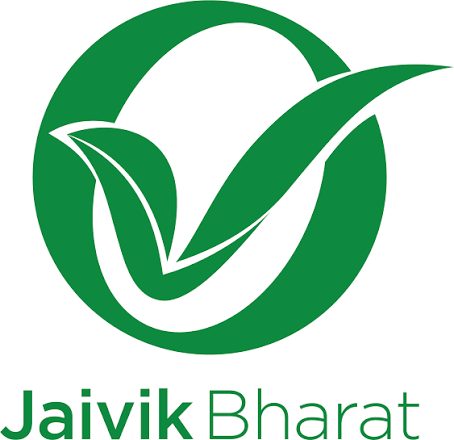
India’s Food Safety and Standards Organic Foods Regulations recognise the NPOP and PGS-India frameworks. FSSAI’s Jaivik Bharat logo provides a unified consumer-facing identity for certified organic foods sold in India. (Jaivik Bharat)
This clears up a common point of confusion:
- Jaivik Bharat is the unified FSSAI organic-food mark.
- India Organic identifies certification under NPOP.
- PGS-India Organic identifies certification under PGS-India.
Third-Party Inspection vs Peer Appraisal
The biggest difference in NPOP vs PGS India is who conducts the assurance process and how the certification decision is reached.
How Third-Party Organic Certification Works
Under NPOP, an accredited certification body remains institutionally separate from the farmer, processor or brand seeking certification.
The certification body may examine:
- Farm and facility records.
- Organic management plans.
- Input purchases and usage.
- Buffer zones and contamination risks.
- Storage and processing arrangements.
- Product movement and transaction records.
- Labelling and use of the India Organic mark.
The certifier can demand corrective action, suspend certification or withdraw certification where standards are not met.
How PGS Peer Appraisal Works
Under PGS-India, farmers actively participate in verification. They inspect one another’s farms, document their observations and collectively review compliance.
This approach can work particularly well in close-knit farming communities because farmers understand local crops, climate, pests, water sources and seasonal practices. It can also turn certification into a learning process rather than only an audit.
However, peer appraisal does not mean that every farmer automatically receives certification. Members who do not comply can be denied certification, downgraded or removed from the group. Regional Councils provide an additional layer of supervision.
Neither system should be reduced to “strict” versus “easy”. A poorly managed programme can fail under either model. A properly implemented NPOP system offers independent scrutiny, while a properly implemented PGS group can provide strong local transparency and accountability.
PGS Organic vs India Organic: What Will Consumers See on a Packet?
For a packaged certified organic food sold in India, consumers should look for the Jaivik Bharat logo and the FSSAI logo with the food business’s licence or registration number. The package may also display the relevant scheme-specific organic logo.
India Organic Logo
The India Organic mark indicates that the product has been certified under NPOP by an accredited certification body.
The mark represents compliance across the production, processing, packing or transaction activities covered by the operator’s certificate and licence to use the logo.
PGS-India Organic Logo
The PGS-India Organic logo means that the food has achieved full organic certification under PGS-India.
A genuine PGS-certified retail label should include a unique identification number connected with the certified operator. Consumers can use this number to check the certification information on the PGS portal.
PGS-India Green Logo
Do not confuse PGS-India Green with fully certified organic food.
PGS-India Green is used for farms or produce that are still under conversion to organic. These products may be described as “under conversion to organic”, but they should not be marketed as fully organic.
Jaivik Bharat Logo
Jaivik Bharat is FSSAI’s common organic-food mark. It helps consumers identify food being sold within India’s organic regulatory framework.
However, an FSSAI licence number by itself is not proof of organic certification. It identifies the food business. The organic claim must still be supported by valid NPOP or PGS-India certification.
Five Quick Organic Certificate-Checking Steps
- Check the logos: Look for Jaivik Bharat and either India Organic or PGS-India Organic.
- Note the details: Record the company, manufacturer, certification body, Regional Council, certificate number, UID and batch number.
- Search Jaivik Bharat: Look up the product or company on FSSAI’s Jaivik Bharat portal.
- Verify the certification: Use the official NPOP or PGS-India database.
- Match the scope: Confirm that the certificate covers the actual product, activity, location and validity period.
That final step is important. A company may possess a valid certificate for one crop, facility or activity but make an organic claim on another product outside the approved scope.
How to Verify an NPOP-Certified Product
Use these steps when a packet carries the India Organic logo.
Step 1: Examine the Organic Food Label
Check for:
- Jaivik Bharat logo.
- India Organic mark.
- FSSAI licence or registration number.
- Manufacturer or packer details.
- Certification body’s name or code.
- Certificate or operator number, where provided.
- Batch or lot information.
Step 2: Search the Jaivik Bharat Portal
The Jaivik Bharat regulatory portal allows consumers to search organic-food information by product, company and FSSAI licence or registration number. Compare the search result with the details printed on the packet. (Jaivik Bharat)
Step 3: Verify the Certification Body
Open APEDA’s official NPOP portal and check whether the named certification body appears on the current accredited list.
A certification agency may be accredited for only particular activities or scopes. Do not assume that an agency’s name on an old packet proves that the present certificate remains valid.
Step 4: Check the Certified Operator
APEDA maintains certification-body operator details and links to operator information. Search for the certified producer, group, processor or handler and compare:
- Name and address.
- Certification status.
- Validity period.
- Approved products.
- Production or processing scope.
The brand name on the front may differ from the certified operator. The operator could be a farmer group, processor, handler or contract packer, but the supply chain should still be explainable and documented. (APEDA)
Step 5: Request the Scope Certificate
A current scope certificate states the activities and products covered by NPOP certification.
For an expensive retail purchase, private-label order or bulk procurement, ask the supplier for the certificate. Check that it has not expired and that the product you are buying is included.
Step 6: Ask for Transaction-Level Evidence
NPOP uses TraceNet to collect forward and backward traceability and quality-assurance information. Certification bodies also issue transaction certificates for certified transactions. (APEDA)
An ordinary retail shopper may not need to examine every transaction certificate. However, bulk buyers, retailers and private-label businesses should request transaction-level evidence before paying a substantial organic premium.
How to Verify a PGS-Certified Product
The PGS organic verification process is designed to provide direct consumer access to certification information.
Step 1: Identify the Correct Logo
Look for PGS-India Organic. Do not mistake PGS-India Green for fully organic status.
Step 2: Find the UID or Certificate Number
A PGS label should carry the unique identification code associated with the certified operator and product. Also note the Local Group, processor or Regional Council details where available.
Step 3: Use PGS Consumer Verification
Enter the UID or certificate number in the consumer-verification section of the official PGS-India portal.
The verification facility can provide information about the producer, group, processor or last certified operator connected with the code. (Jaivik Bharat)
Step 4: Match the Product and Status
Confirm that:
- The certificate is active.
- The operator’s name matches.
- The relevant crop or product is included.
- The certification status is PGS Organic rather than PGS Green.
- The certificate covers the relevant season or validity period.
A certificate for organic turmeric does not automatically cover honey, millets, oils or processed snacks sold by the same group.
Step 5: Contact the Regional Council
The public portal may display the last certified operator rather than every participant in the supply chain.
PGS operational guidelines allow consumers to approach the relevant Regional Council for fuller traceability records using the UID and transaction-certificate information.
Is One Organic Certification Better Than the Other?
For Indian consumers, both systems can be trustworthy when the certificate is genuine, current and relevant to the product.
NPOP May Be More Suitable When:
- Independent third-party oversight matters.
- The product passes through several processors or handlers.
- You are buying from a large national brand.
- You are sourcing in bulk.
- Export eligibility is required.
- Formal transaction documentation is important.
PGS-India May Be More Suitable When:
- You are buying from a farmer collective.
- The produce comes through a short local supply chain.
- The farmer group and Regional Council are clearly identified.
- The UID provides useful producer-level information.
- Participatory monitoring and local accountability are important.
The practical verdict on NPOP vs PGS India is straightforward: NPOP provides greater institutional separation between the operator and certifier, while PGS-India provides greater farmer participation and local ownership.
Trust the verified certificate—not the premium packaging, emotional farming story or high price.
Organic certification is mainly an assurance about farming, processing and traceability systems. It does not automatically prove that every certified food is more nutritious, tastier or completely free from every detectable environmental residue. FSSAI separately prescribes residue and contaminant limits for organic foods.
Warning Signs of a Questionable Organic Claim
Be cautious when you notice any of the following:
- “100% organic” is printed prominently, but there is no official certification information.
- The product uses only words such as “natural”, “traditional”, “pure” or “farm fresh”.
- A PGS-India Green product is being sold as fully organic.
- The organic logo appears stretched, blurred, recoloured or copied.
- A packaged food has no FSSAI licence or registration number.
- The certification body cannot be found on APEDA’s current list.
- The certificate has expired.
- The listed certificate does not cover the product.
- The company or address on the portal does not match the packet.
- A multi-ingredient product makes a broad organic claim without clarifying its certified ingredients.
- The seller refuses to share the UID, certificate number, scope certificate or Regional Council details.
A failed database search does not automatically prove fraud. The brand, manufacturer, processor and packer may be separate businesses. Nevertheless, an unexplained mismatch is a good reason to request supporting documents before paying an organic premium.
Final Verdict: Which Certification Should Consumers Trust?
The NPOP vs PGS India debate does not have one universal winner. Both are government-recognised routes for organic assurance, but they are intended for different supply chains.
NPOP is the clearer option for independent third-party certification, national or international supply chains and exports. PGS-India is a credible domestic system built around farmer participation, peer appraisal and local transparency.
Whichever logo appears on the packet, check the operator, certificate validity, approved product scope and traceability information before trusting the claim.
Frequently Asked Questions
Is PGS-India certification genuine?
Yes. PGS-India is a government-recognised organic assurance system intended mainly for local and domestic markets. Its reliability depends on proper peer appraisal, documentation, certification decisions, Regional Council supervision and valid portal records.
Is NPOP certification compulsory for exporting organic food?
Organic products exported from India must comply with NPOP regulatory requirements. Exporters must also check the organic rules and documentation required by the destination country.
Can PGS-certified products be sold across India?
PGS-India is intended for domestic marketing. Certified products can pass through approved processing, handling and trading chains when the programme’s certification, traceability and labelling requirements are followed.
PGS-India certification should not, however, be treated as a substitute for NPOP export certification.
What Is the Difference Between India Organic and Jaivik Bharat?
India Organic is the certification mark associated with NPOP. Jaivik Bharat is FSSAI’s unified logo for certified organic food sold under India’s Organic Foods Regulations.
What Is the Difference Between PGS Organic and PGS Green?
PGS Organic indicates full organic certification. PGS Green indicates that the producer or land is still under conversion and the product cannot be claimed as fully organic.
Does an FSSAI Licence Prove That Food Is Organic?
No. An FSSAI licence identifies the registered or licensed food business. Organic authenticity must still be supported by valid NPOP or PGS-India certification.
Does “Natural” Mean the Same as “Certified Organic”?
No. Natural, pure, traditional, residue-free and chemical-free are not substitutes for certified organic status. Look for the official marks and verify the associated certificate.
Which Is More Trustworthy: NPOP or PGS-India?
Both can be trustworthy. NPOP relies on accredited third-party certification bodies, while PGS-India relies on participatory peer appraisal supported by Regional Council oversight.
A current certificate that covers the product is more meaningful than choosing between the two systems based only on the logo.
See Also
NPOP vs PGS-India — Which Certification Is Right for You?
The Definitive Guide to Organic Food Labels: What Do They Actually Mean?
How to Check Organic Certification Online in India: A Simple Shopper’s Guide