
Let’s be completely honest for a second. Walking down the grocery aisle in India today feels a bit like navigating a high-stakes treasure hunt. Everywhere you look, packets of dal, rice, and spices are screaming for your attention.
One box claims it’s “100% Natural.” Another boasts that it’s “Pure and Earth-Friendly.” And right next to it sits a premium packet sporting a shiny green logo claiming to be “Certified Organic.”
If you’ve ever stood there holding two packets of tur dal—one costing ₹90 and the other ₹180—wondering if the price jump is actually worth it, you are definitely not alone. We’ve all been there, scratching our heads and asking ourselves: “Is this real, or is it just clever marketing?”
The truth is, the wellness world is full of buzzwords. But when it comes to safeguarding your family’s health, you shouldn’t have to rely on guesswork. Today, we are going to completely demystify organic food labels once and for all. By the end of this guide, you’ll know exactly how to spot authentic organic produce, save your hard-earned money from marketing traps, and shop with absolute confidence.
So, grab a warm cup of chai, and let’s break it down together!
Natural vs Organic Food: Decoding the Grocery Store Buzzwords
Before we dive into the technical seals and stamps, let’s clear up the single biggest point of confusion for Indian shoppers: the massive showdown between natural vs organic food.
Many people use these two terms interchangeably, assuming they mean the exact same thing. In fact, many brands rely on this exact confusion to charge you a premium. Let’s unpack what is actually going on behind those labels.
What Does “Natural” or “Pure” Really Mean?
When a packet of honey or a bag of flour says “100% Natural” or “From Nature’s Basket,” here is what it legally means: almost nothing.
In India, the term “natural” is not strictly regulated by a centralized food authority in terms of farming practices. It generally just means that the manufacturer hasn’t added artificial colors, synthetic flavors, or heavy chemical preservatives after the food was harvested.
However, it tells you absolutely zero about how that food was grown. That “natural” wheat could have been heavily sprayed with chemical pesticides, synthetic fertilizers, and weed-killers while it was growing in the field.
What Makes Something Truly Organic?
On the flip side, true organic food is completely different. When a product is backed by authentic organic food labels, it doesn’t just describe the final product—it guarantees a strict, legally monitored journey from the soil to your kitchen.
True organic farming means:
- Zero Synthetic Chemicals: No chemical pesticides, weedicides, or artificial fertilizers are allowed near the soil or the crops.
- Non-GMO: The seeds used cannot be genetically modified in a laboratory.
- Soil Health First: Farmers must use traditional, sustainable methods like crop rotation, composting, and panchagavya or jeevamrutha (traditional Indian organic bio-formulations) to nourish the earth naturally.
- Strict Isolation: Organic farms must have clear barrier zones to prevent chemical runoff from neighboring conventional farms.
The Golden Rule for Your Kitchen: “Natural” is a marketing claim that looks pretty on a box. “Organic” is a legal certification that protects your health. If you are paying extra, always look for official organic food labels, never just the word “natural.”
Understanding the Indian Regulatory Landscape: FSSAI Jaivik Bharat and More
Now that we know why certification matters, let’s look at the actual seals you need to look for when buying organic in India.
A few years ago, the Indian organic market was a bit like the Wild West. Anyone could print the word “organic” on a brown paper bag and sell it at a premium. Thankfully, things have changed. The Government of India stepped in to streamline the organic certification process and protect consumers from fraud.
When you are looking for certified organic brands in India, there are three major pillars of certification you need to memorize.
                    ┌───────────────────────────────┐
                    │     THE INDIAN CONSUMER       │
                    └───────────────┬───────────────┘
                                    │
                        Must look for the unifying:
                                    ▼
                    ┌───────────────────────────────┐
                    │      JAIVIK BHARAT LOGO       │
                    │   (FSSAI Certified Organic)   │
                    └───────────────┬───────────────┘
                                    │
          ┌─────────────────────────┴─────────────────────────┐
          ▼                                                   ▼
┌───────────────────┐                               ┌───────────────────┐
│     NPOP LOGO     │                               │     PGS-INDIA     │
│ (India Organic)   │                               │  (Participatory)  │
├───────────────────┤                               ├───────────────────┤
│ • Large-scale     │                               │ • Small farmer    │
│ • Export grade    │                               │   cooperatives    │
│ • Third-party     │                               │ • Local markets   │
│   audited         │                               │ • Peer-reviewed   │
└───────────────────┘                               └───────────────────┘
1. The Jaivik Bharat Logo (The Ultimate Green Check)
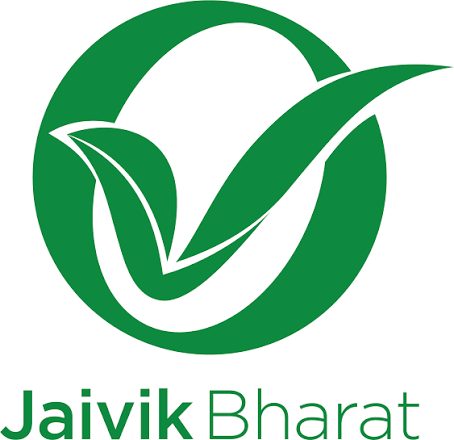
If you remember only one thing from this entire article, let it be this logo. Launched by the Food Safety and Standards Authority of India (FSSAI), the Jaivik Bharat logo is your absolute guarantee of authenticity.
The logo features a green leaf turning into a checkmark, enclosed in a circle with the words “Jaivik Bharat” written below it. By Indian law, no brand can sell a product labeled as “organic” unless it carries this exact symbol on the packaging. It acts as a unified umbrella, proving that the product has cleared the country’s strict regulatory hurdles.
2. India Organic (NPOP Seal)
The National Programme for Organic Production (NPOP) is a system managed by the Ministry of Commerce. When you see the gorgeous India Organic logo (which looks like a stylized blue and green sun celebrating nature), it means the food has been certified through a rigorous, third-party auditing process.
- Who it’s for: Usually found on larger, well-established certified organic brands available in supermarkets or online apps.
- The Standard: This certification is incredibly strict and is recognized internationally (including in the US and the European Union). If a product carries this logo, you can rest assured it meets global organic farming standards.
3. PGS-India (The Grassroots Movement)
But what about the smaller, local farmers who can’t afford the expensive paperwork of big commercial certifications? That’s where the Participatory Guarantee System (PGS-India) comes in.
PGS-India is a peer-review certification system run by the Ministry of Agriculture. Small groups of local farmers form a cluster and inspect each other’s fields to ensure nobody is using chemicals.
- The Logo: Look for a round logo with a green leaf cluster forming a circle, explicitly saying “PGS-India Organic.”
- Why support it: Buying products with the PGS-India label is a wonderful way to support local, small-scale Indian farmers who are genuinely doing the right thing for the soil but selling primarily in local community markets.
Global Organic Food Labels Found on Indian Shelves
Because we love our imported organic quinoa, extra virgin olive oils, and exotic herbal teas, you will frequently spot international organic food labels in Indian gourmet stores. Understanding these helps ensure you aren’t overpaying for imported duplicates.
USDA Organic (United States)
One of the most widely recognized labels globally. The round, green-and-white USDA Organic seal guarantees that the product contains at least 95% organically grown ingredients managed according to strict US federal guidelines.
The EU Organic Leaf (Europe)
If you love imported European dark chocolates, olive oils, or oats, look for a leaf shape made out of 12 white stars against a bright green background. This is the Euro-Leaf, and its standards are among the most stringent in the entire world, particularly regarding biodiversity preservation and animal welfare.
Step-by-Step Checklist: How to Verify Authentic Organic Produce in India
Alright, let’s get highly practical. The next time you are ordering your weekly groceries online or filling your cart at a local organic boutique, use this quick, mental 4-step checklist to ensure you are getting 100% authentic organic produce.
Step 1: Turn the Packet Around
Never buy a product based purely on the beautiful imagery of green farms on the front of the box. Flip it over and look directly at the back panel, right next to the nutritional information and ingredient list.
Step 2: Hunt for the Dual Logo System
For locally packaged Indian products, look for the Jaivik Bharat logo working in tandem with either the India Organic (NPOP) or PGS-India logo. If a brand features a homemade-looking leaf graphic but lacks these official government-regulated stamps, leave it on the shelf.
Step 3: Inspect the Batch Traceability
Truly transparent, premium organic brands have nothing to hide. Look for a specific batch number, certification code, or a QR code on the back. Many top-tier Indian brands now allow you to scan a QR code that shows you the exact region or cooperative farm where that specific batch of basmati rice or turmeric was harvested!
Step 4: Rely on the Sensory Test (Once Opened)
While labels give you legal peace of mind, your senses provide the ultimate confirmation. True organic food behaves differently in an Indian kitchen:
- The Aroma: Organic spices like haldi (turmeric), hing (asafoetida), and jeera (cumin) have a much deeper, pungent, earthy aroma compared to chemical-laden variants.
- The Look: Authentic organic produce is rarely “perfect.” Organic apples might have slight blemishes, organic atta might look slightly darker, and organic jaggery is deep brown rather than the bright, chemically bleached yellow found in conventional markets. Imperfection is a sign of nature at work!
The Hidden Costs of Fake Labels: Why Greenwashing Hurts Us
It’s important to talk about why we need to be so vigilant about checking these organic food labels. When a brand misleads you into buying fake organic products, it isn’t just a minor financial annoyance—it has a profound ripple effect on our entire ecosystem.
This deceptive marketing practice is known as Greenwashing. It happens when a company spends more time, money, and creative design work on looking eco-friendly and healthy rather than actually ensuring their products are chemical-free.
┌────────────────────────────────────────────────────────┐
│             THE COST OF GREENWASHING                   │
├───────────────────────────┬────────────────────────────┤
│   To Your Household       │   To Our Indian Farmers    │
├───────────────────────────┼────────────────────────────┤
│ • Paying premium prices   │ • Undercuts honest, hard-   │
│   for basic chemicals     │   working organic farmers  │
│                           │                            │
│ • Continued intake of     │ • Damages long-term trust  │
│   pesticide residues      │   in the organic ecosystem │
└───────────────────────────┴────────────────────────────┘
When we accidentally support greenwashed brands, we are actively taking business away from honest, hardworking Indian farmers who spend three long years transitioning their soil away from toxic chemicals to clear the official organic certification process. Genuine organic farming takes intense manual labor, patience, and dedication. By ensuring we only buy products verified by genuine labels, we make sure our money directly supports the true heroes of Indian agriculture.
Quick Summary for the Busy Shopper
We’ve covered a lot of ground today! Let’s wrap up the core takeaways so you can keep them handy for your next grocery run:
- Natural does not mean Organic: “Natural” is unmonitored marketing prose; “Organic” is heavily legislated farm-level safety.
- The Big Three Logos: Always look for the Jaivik Bharat symbol paired with either India Organic or PGS-India.
- Imperfection is beautiful: Real organic fruits and vegetables don’t look like shiny plastic toys. Embrace the natural variations in size, shape, and color.
- Traceability is Key: Trust brands that openly share their sourcing origins, cooperative networks, and testing metrics.
Over to You: What’s in Your Cart?
Switching over to a clean, organic lifestyle is a beautiful journey, and it doesn’t have to happen overnight. You don’t need to throw out everything in your pantry this evening. Start small! Swap out your most heavily consumed daily essentials first—like your cooking oil, your daily chai leaves, or your basic spices.
As you gradually build up your organic pantry, you will quickly find that the incredible aroma, richer taste, and absolute peace of mind are worth every single rupee.
Now, we want to hear from you! What is the biggest challenge you face when searching for genuine organic food in your city? Have you spotted the Jaivik Bharat logo on your favorite brands yet? Let’s chat in the comments section below!
See Also
Is Organic Food More Nutritious? What Science Honestly Says
Organic Food Labeling