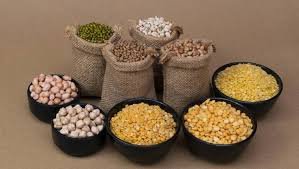

If there is one comfort food that unites every single regional kitchen across India, it is a warm bowl of dal. Whether it is a comforting Kadi-Chawal in Delhi, a hearty Dalma in Odisha, a tangy Sambar in Chennai, or a velvety Dal Makhani in Punjab, lentils are the absolute backbone of our dietary protein.
But next time you visit your local kirana store or scroll through an online grocery app, take a close look at the dal section. You will likely see two distinct versions of the exact same lentil: one packet features perfectly smooth, glossy, bright yellow grains that look beautiful on the shelf. Right next to it sits a slightly duller, matte-finish packet with sharp edges and uneven coloring.
The shiny one looks more appealing, right? Our brains are naturally wired to believe that “shinier equals cleaner and better quality.”
However, when it comes to Indian groceries, that logic is completely backward. The debate between unpolished dal vs polished dal is one of the least understood food choices in the modern Indian home. What your family gains in visual appeal from polished lentils, they lose significantly in nutrition, flavor, and purity.
Let’s dive into the honest, no-nonsense truth about what happens to our favorite dals before they reach your pressure cooker, and help you decide which option truly deserves a permanent spot in your kitchen.
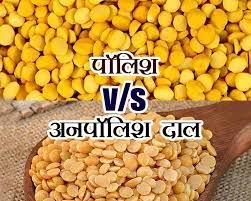
🏭 Why Dal Polishing Became Common in India
To understand why polishing became an industry standard, we have to look at the commercial supply chain. Decades ago, most families bought their pulses directly from a local stone chakki or hand-pounded sources. The lentils were naturally rough, uneven, and intensely aromatic.
As industrial milling grew, brands realized that mass-distributed pulses faced two major issues: shelf appeal and shelf life.
- The Beauty Contest: In a supermarket aisle, a dull-looking lentil has a hard time competing. Mechanical milling units started buffing the grains to give them an attractive appearance that appeals to consumers.
- Moisture & Pest Control: Stripping away the natural outer layer and coating the grain makes it less attractive to weevils (sursuri) and bugs, extending its shelf life significantly. This allows large-scale distributors to store old grain stocks for months (or even years) without visual spoilage.
Essentially, polishing was invented to benefit commercial sellers and distributors, not the health of the families eating the food.
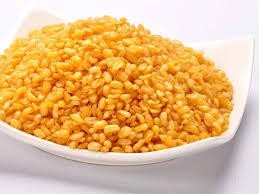
🧼 What is Polished Dal?
Polished dal is a pulse that has been de-husked, split, and then put through an extra cosmetic manufacturing step purely to improve its glossiness and uniformity.
During high-speed commercial milling, the split lentils are tumbled in polishing machines. To achieve that signature gleam, factories commonly treat them with polishing agents:
- Water polishing: The grains are spun with water to scrub off the outer bran layer.
- Oil polishing: A thin layer of refined oil or cheap vegetable fats is applied to make the grain surfaces highly reflective.
- Powder polishing: In some commercial setups, marble powder, soapstone powder, or chalk dust is tumbled with the lentils to fill in microscopic cracks and yield a flawlessly smooth, silky texture.
⚠️ A Note on Food Safety: While water and oil polishing are cosmetic, powder polishing with soapstone or marble dust can leave chemical residues that aren’t ideal for your digestive tract over long periods.
🌾 What is Unpolished Dal?
Unpolished dal completely skips this artificial cosmetic phase. It is cleaned, de-husked, and split naturally, but it goes straight into packaging without any extra buffing, oils, or powders.
Because it remains untouched by synthetic polishing agents, it retains its natural outer layer—the thin, nutrient-dense skin sitting just underneath the hull known as the bran layer.
Visually, unpolished dal looks a bit rustic. The colors between individual grains might vary slightly, the edges remain naturally sharp rather than rounded off, and it has a flat, matte appearance. But that plainer aesthetic is exactly what makes it a powerhouse of raw nutrition.
⚖️ Head-to-Head: Unpolished Dal vs Polished Dal
To make it easier to see how these processing methods alter your daily meals, let’s break down the practical differences in appearance, cooking behavior, and eating experience:
| Feature | Unpolished Dal | Polished Dal |
| Appearance | Matte, slightly rough, sharp edges, natural color variations. | Highly glossy, uniform color, smooth rounded edges. |
| Nutritional Profile | Retains full dietary fiber, iron, B-vitamins, and folate. | Loses up to 30–40% of micronutrients and fiber. |
| Glycemic Index | Lower GI (digests slowly, stabilizes blood sugar). | Higher GI (digests faster, can cause mild sugar spikes). |
| Taste & Aroma | Deeply earthy, nutty, and traditional. | Milder, neutral, sometimes loses its natural aroma. |
| Cooking Time | Requires a slightly longer cook or pre-soaking. | Cooks quickly, but can break down into a mushy texture. |
| Additives/Coatings | None. Pure and close to nature. | May contain traces of water, oil, or soapstone powder. |
| Shelf Life | Shorter (needs airtight, dry storage). | Very long (highly resistant to external moisture). |
👩🍳 The Practical Kitchen Test: Cooking, Taste, and Prep
Many Indian home cooks hesitate to switch to unpolished varieties because they worry it will disrupt their daily cooking routine. Let’s separate the facts from the myths.
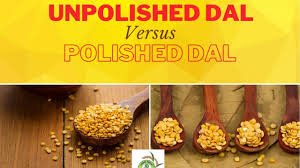
Does unpolished dal need more washing or soaking?
The short answer is no, it doesn’t need extra washing, but it loves a good soak.
When you wash polished dal, you will often notice the water turning incredibly milky, cloudy, or even greasy. That isn’t dirt; it’s the artificial starch, oil, or stone powders washing off the surface. Unpolished varieties don’t have these coatings, so a quick rinse to clear away field dust is all it takes.
However, because unpolished lentils retain their natural fiber-rich bran layer, they absorb water a bit more slowly. To get the best results, soak your unpolished dal for 20 to 30 minutes before cooking. ### The Difference in Your Bowl
If you have ever eaten a simple Arhar dal at your grandmother’s village home and wondered why it tasted infinitely richer than the urban supermarket version, you are experiencing the power of unpolished grains.
The natural oils preserved in the bran layer give unpolished dal a distinct, full-bodied, nutty flavor. Furthermore, when pressure-cooked, unpolished dal retains a beautiful, velvety texture without completely disintegrating into a watery soup. If you are making Idli or Dosa batter using unpolished Urad dal, the natural mucilage left intact helps the batter ferment beautifully, resulting in much fluffier idlis.
🔬 Which Dals Are Worth Buying Organic?
If you are trying to clean up your family’s diet on a budget, you don’t necessarily have to change your entire pantry overnight. However, certain daily-use pulses are heavily processed and are absolutely worth buying from certified organic, unpolished sources:
- Toor / Arhar Dal: As the absolute daily standard in most Indian homes, this is the most heavily polished and oil-treated dal in the commercial market. Switching this first will offer the biggest health upgrade for your family.
- Urad Dal (Split & Whole): Vital for making fermented batters (idlis, dosas) and festive dishes. Unpolished urad dal contains up to 28g of dietary fiber per 100g, which acts as a fantastic prebiotic for gut health.
- Moong Dal (Yellow & Chilka): Known as the gentlest, easiest-to-digest dal, it is often given to children and recuperating individuals. Defeating the purpose of its clean profile by buying a chemically polished version is a missed opportunity for easy nutrition.
🛑 How to Identify Fake “Unpolished” Marketing Gimmicks
As the demand for whole foods rises across India, some commercial brands have started using deceptive labeling. Packages might carry catchphrases like “Natural” or “Premium Selection” while still containing polished grains inside.
Here is how you can spot the real deal using your own eyes and hands:
                  [How to Test Your Dal at Home]
                                 |
         -------------------------------------------------
        |                                                 |
  [The Water Touch Test]                           [The Edge Inspection]
  - Dip dry fingers into the dal bag.              - Pick up a single grain of split dal.
  - If a powdery white residue or a                - Real unpolished dal has a sharp,
    greasy film sticks to your skin,                 well-defined edge ("Katori edge").
    it is artificially polished.                   - Polished dal has smooth, blunt edges.
- Check the Dust: Reach your hand deep into the dal packet. Real unpolished pulses have a tiny bit of natural, chalk-free lentil dust. If your hands come out with a greasy sheen, it has been oil-polished.
- Look for Flaws: True unpolished dal isn’t perfect. You will find slight color variations, an occasional darker speck, and a completely matte texture. If every single grain looks like a flawless, glossy yellow bead, it has been machine-polished.
📦 How to Store Your Unpolished Dal Safely
Because unpolished dal retains its natural nutrients and oils, it is naturally more appealing to pantry pests. Since it lacks synthetic chemical coatings to preserve it indefinitely, proper storage in the Indian climate is essential:
- Use Airtight Containers: As soon as you open a packet, transfer the dal to a clean, bone-dry glass or high-quality stainless-steel container.
- Keep it Cool: Avoid storing your dal canisters right next to your gas stove or oven, where heat and steam can compromise the shelf life.
- The Traditional Remedy: Toss 2-3 dried red chillies or a couple of bay leaves (tej patta) into the container. The natural aromas act as an effective, chemical-free deterrent against weevils.
🙋♀️ Frequently Asked Questions (FAQs)
Q1. Is unpolished dal more expensive than polished dal?
Ans: Unpolished and organic dals can sometimes carry a small price premium because they require careful handling, clean sorting, and don’t use artificial means to extend shelf life. However, since they pack significantly more fiber and nutrients per bite, they offer much better value for your family’s health.
Q2. Does unpolished dal take significantly more whistles in a pressure cooker?
Ans: Not significantly. If you soak the dal for about 20 minutes before cooking, it will usually cook within the exact same 3 to 4 whistles as polished dal, while holding its shape much better.
Q3. Can people with diabetes benefit from switching to unpolished pulses?
Ans: Absolutely. The intact bran layer gives unpolished dal a lower Glycemic Index (GI). This means it releases glucose into the bloodstream slowly and steadily, preventing sudden post-meal blood sugar spikes.
Q4. Why does my polished dal turn mushy and watery after cooking?
Ans: The intense friction and heat involved in the commercial polishing process can fracture the internal starch structure of the lentil. Without the structural support of the natural outer layer, the grain breaks down completely into a mushy paste when boiled.
🌸 The Verdict: What Should Your Family Buy?
When we look at the comparison of unpolished dal vs polished dal, the choice becomes incredibly clear. Polishing is entirely skin-deep—it makes the lentil look beautiful on a shelf but robs your family of dietary fiber, iron, B-vitamins, and true heritage flavor.
By choosing unpolished, naturally processed pulses, you are bringing ancestral wisdom back into your modern kitchen. Your daily dal-chawal or khichdi won’t just taste more robust and flavorful; it will deliver the complete, clean, wholesome nutrition that nature always intended.
Make the switch with your next grocery run—your family’s health and gut will thank you for it!
Which dal are you planning to switch to its unpolished version first? Let us know your thoughts in the comments below!
See Also
Polished Vs. Unpolished Dal | The Diet Studio
Polished vs Unpolished daal, which is better?
Organic Jaggery vs Regular Jaggery: How to Choose Better Gur for Your Indian Kitchen
Cold Pressed vs Refined Oil: Which is Better for Indian Cooking ?